
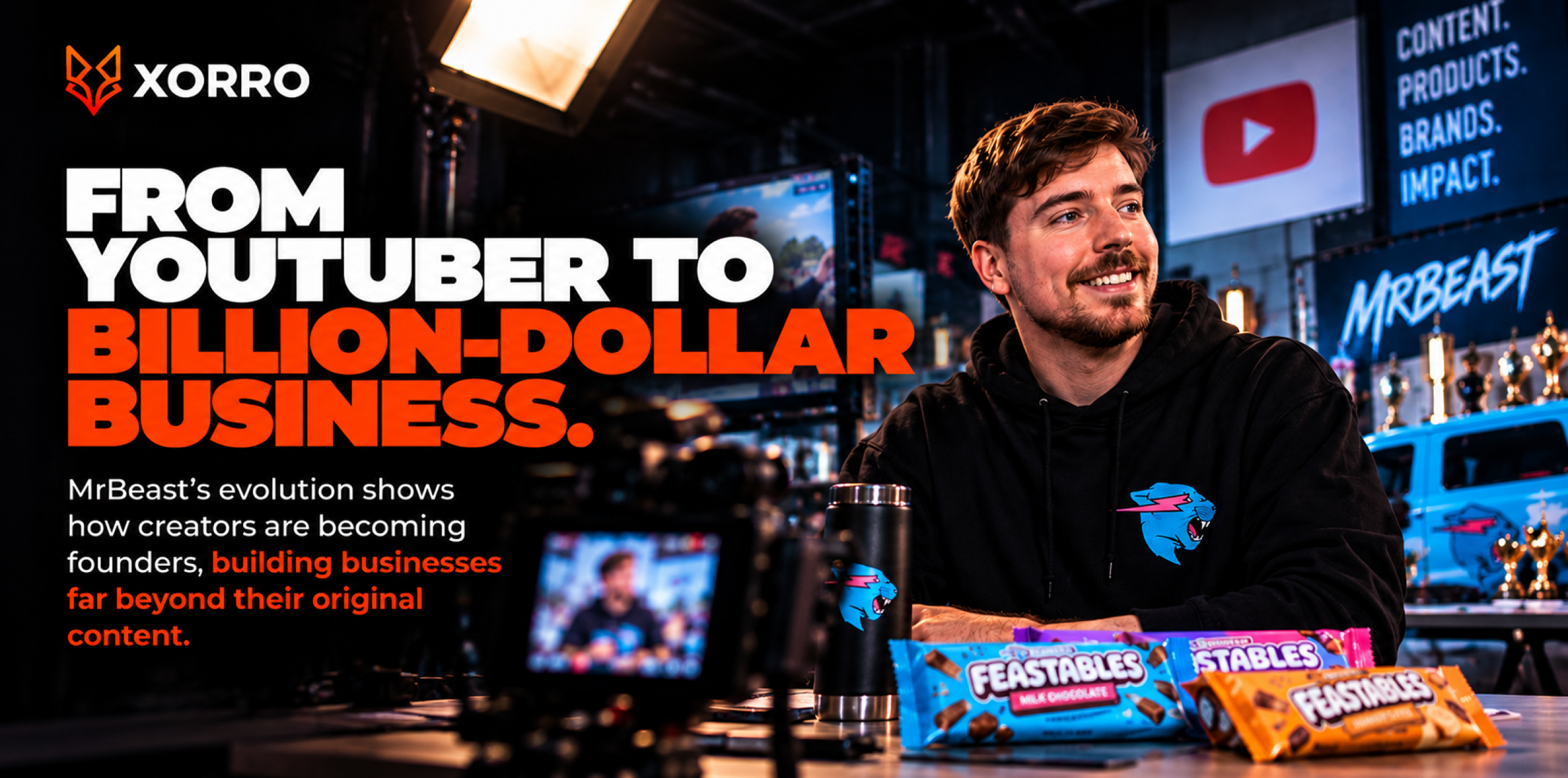
MrBeast's transformation from YouTube creator to business founder highlights a major shift in the creator economy, where audiences are becoming the foundation for businesses, brands and long-term commercial growth.
The creator economy is entering a new chapter.
What began as an industry largely centred around content creation, advertising revenue and brand sponsorships is evolving into something much bigger. Creators are increasingly becoming entrepreneurs, launching products, building companies and developing businesses that extend far beyond social media.
Few examples illustrate this transformation better than Jimmy Donaldson, better known as MrBeast.
A recent Fortune article explores how MrBeast has developed from a YouTube personality into the founder of a multibillion-dollar business group, demonstrating the growing commercial potential of creator-led entrepreneurship.
From Content Creator to Business Founder
MrBeast began his YouTube journey as a teenager, creating gaming videos before developing the ambitious challenges and large-scale productions that would eventually attract hundreds of millions of subscribers.
Today, his business interests extend well beyond YouTube.
Through Beast Industries, Donaldson oversees a growing portfolio of ventures, including his popular chocolate brand Feastables, entertainment production and other consumer-facing businesses.
According to Fortune, Beast Industries has an estimated valuation of $5 billion, reflecting the scale of the operation behind one of the world's most recognisable creators.
What makes this particularly interesting is that MrBeast hasn't simply used his popularity to secure sponsorship deals. He's used his audience, brand recognition and creative expertise to build businesses of his own.
It's a significant shift from the traditional influencer model.
The Evolution of the Creator Economy
In the Fortune article, entrepreneur and investor Steven Bartlett discusses how the relationship between creators and businesses has evolved.
Initially, creators were primarily paid to promote products through sponsored content and advertising partnerships.
Over time, those relationships became more sophisticated, with creators taking on creative roles, negotiating equity stakes and becoming more involved in the development of brands.
Now, we're seeing another evolution: creators founding and owning the businesses themselves.
MrBeast represents one of the most prominent examples of this transition, building an organisation with professional management, multiple business divisions and ambitions extending beyond content production.
And he's not alone.
Across the creator economy, entrepreneurs are increasingly recognising that an established audience can provide the foundation for launching products, developing brands and entering entirely new markets.
Creators are no longer just promoting businesses. They're building them.
Why Community Is Becoming a Competitive Advantage
One of the defining characteristics of creator-led businesses is the relationship between the entrepreneur and their audience.
Traditional businesses often invest heavily in marketing to establish brand awareness, build trust and attract customers.
Creators, however, may already have something incredibly valuable: an engaged community that understands their personality, follows their journey and connects with their brand.
That relationship can create opportunities to introduce new products and services to an existing audience.
MrBeast's expansion into consumer products demonstrates how influence developed through content can translate into commercial opportunities beyond the platform where it originated.
Of course, a large following doesn't automatically guarantee business success. Product quality, operational execution, financing and long-term strategy remain essential.
But the ability to build a business around an established community represents an increasingly important development in modern entrepreneurship.
What This Means for the Future of Creator-Led Businesses
As more creators transition into business ownership, their requirements begin to resemble those of traditional entrepreneurs.
Growing a business requires capital, infrastructure, professional teams and access to the right commercial opportunities.
Whether launching a consumer product, expanding internationally or developing new services, creators need ways to support their ambitions beyond advertising revenue and brand partnerships.
This evolution is also changing how investors and financial institutions view the creator economy.
Rather than simply evaluating an individual's ability to generate views or engagement, there is growing recognition of the potential for creators to develop independent businesses with diversified revenue streams.
The creator economy is becoming an entrepreneurial economy.
Where Xorro Fits Into This Evolution
At Xorro, we believe the rise of creator-led businesses represents an exciting opportunity to rethink the relationship between entrepreneurs, capital and their communities.
Creators have spent years building audiences that support their content, purchase their products and help grow their brands.
As those creators become business owners, we believe there is an opportunity for that relationship to evolve further.
Through Xorro, entrepreneurs can explore fundraising opportunities involving different investment structures, including equity, debt and revenue-sharing arrangements, depending on the offering.
Our vision is to help creator-led businesses access capital while giving eligible members of their communities opportunities to participate financially in the businesses they believe in.
MrBeast's journey illustrates the extraordinary potential of creator entrepreneurship. While few creators will build businesses of the same scale, the broader shift towards ownership and business creation is opening up opportunities across the industry.
A New Generation of Entrepreneurs
The creator economy is no longer defined solely by views, subscribers or sponsorship revenue.
It's increasingly defined by businesses being built, products being launched and communities supporting entrepreneurs as they grow.
MrBeast's transformation from YouTuber to business founder demonstrates just how far this evolution can go.
And as more creators follow a similar path, access to capital and meaningful community participation could become increasingly important parts of the next generation of creator-led businesses.
At Xorro, we're excited to be part of that future.
Where fans become shareholders.
Source
Inspired by reporting from Fortune, published 21 October 2026.
Read the original Fortune article: MrBeast's business resembles a Fortune 500 holding company
Investment opportunities involve risk, including the potential loss of invested capital. Private investments may be illiquid and are not suitable for all investors.