
The creator economy is undergoing a significant shift. While traditional sponsorships and paid partnerships remain an important source of income, a growing number of creators are looking beyond one-off promotional deals towards something with longer-term potential: business ownership.
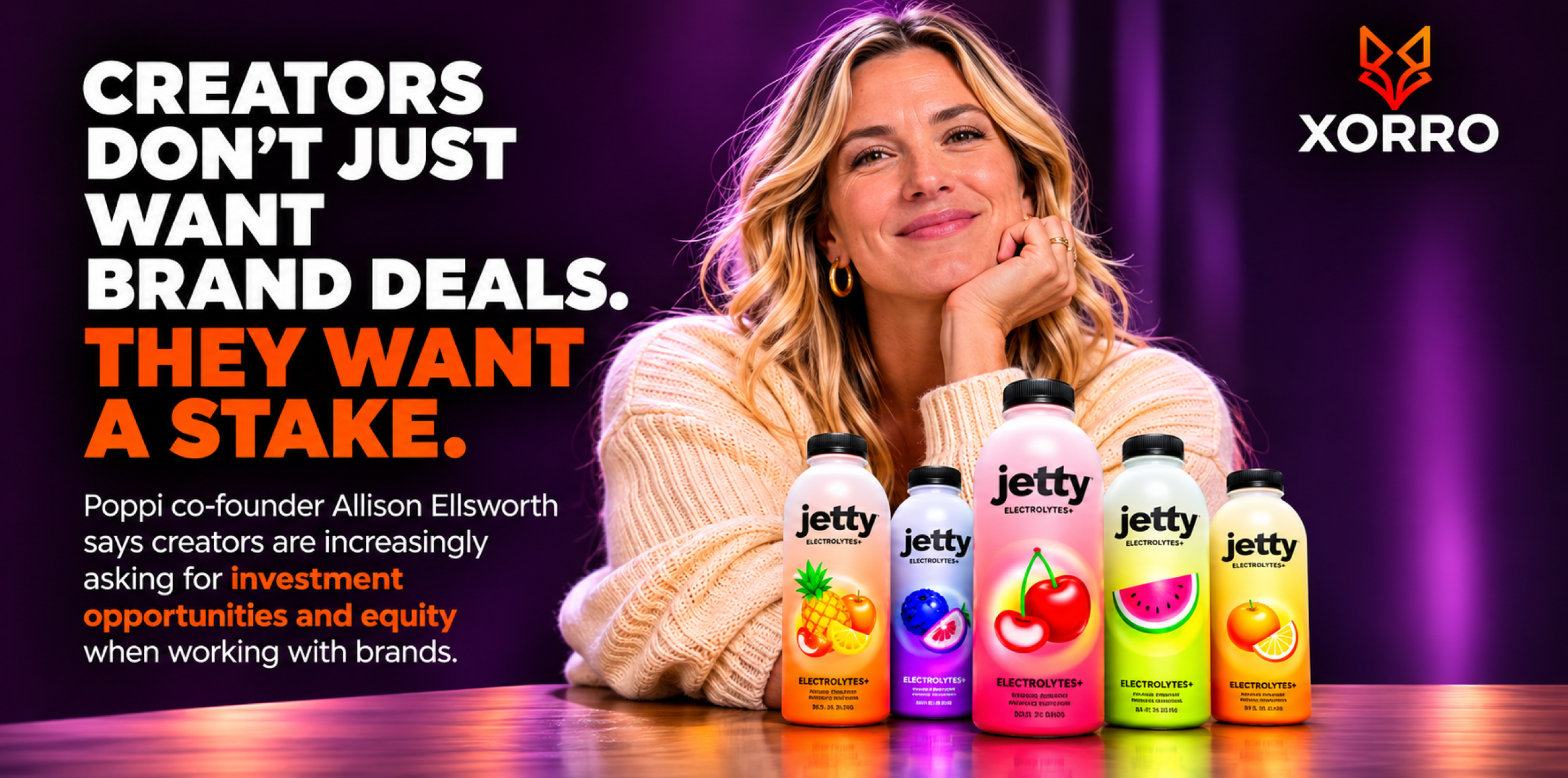
According to Allison Ellsworth, co-founder of the hugely successful beverage brand Poppi, creators are increasingly interested in taking an investment stake in the companies they work with, rather than simply receiving payment to promote their products.
It's a development that reflects a wider transformation in the creator economy, where influence is becoming a foundation for entrepreneurship, investment and long-term business value.
From Poppi's Billion-Dollar Exit to a New Venture
Allison Ellsworth knows firsthand what it takes to build a successful consumer brand.
As co-founder of Poppi, the prebiotic soda company acquired by PepsiCo in 2025 for approximately $1.95 billion, Ellsworth helped develop a business that became one of the most recognisable names in the rapidly growing functional beverage market.
Following Poppi's success, Ellsworth has turned her attention to a new venture: Jetty, a hydration brand entering an increasingly competitive consumer market.
However, as she explores potential partnerships with creators, Ellsworth has noticed a change in how they approach commercial opportunities.
Rather than focusing exclusively on sponsorship fees, some creators are now asking about investment opportunities, advisory positions and the possibility of holding equity in the businesses they help promote.
This shift suggests that creators are becoming increasingly aware of the value they can bring to emerging brands.
Why Creators Want More Than Sponsorship Fees
For years, the relationship between brands and creators has largely followed a familiar model.
A business pays a creator to promote a product, the creator introduces that product to their audience, and the partnership typically concludes once the campaign has finished.
While this arrangement can benefit both parties, it doesn't necessarily allow creators to participate in the longer-term growth of the businesses they help build.
Equity-based arrangements offer a different approach.
By taking an ownership stake, creators may have the opportunity to benefit from a company's future success, while brands can develop deeper relationships with individuals who understand their products and audiences.
Of course, ownership also carries risk. Unlike guaranteed sponsorship payments, equity investments can lose value, may be difficult to sell and offer no assurance of financial returns.
Nevertheless, the growing interest in these arrangements reflects a broader change in how creators view their commercial influence.
They're increasingly looking to become business partners, investors and entrepreneurs, rather than simply promotional channels.
Building Businesses Around Communities
One of the defining characteristics of the creator economy is the relationship between creators and their audiences.
Successful creators often spend years building communities around shared interests, experiences and trust.
For consumer brands, these relationships can provide valuable opportunities to introduce products, understand customer preferences and build awareness.
However, the next stage of the creator economy may involve giving creators a more meaningful role in the businesses they support.
Jetty's discussions with potential creator investors and advisers illustrate how companies are exploring new partnership structures that go beyond traditional advertising.
Although these discussions do not necessarily represent completed investment agreements, they highlight the increasing importance of ownership in conversations between creators and brands.
The opportunity is no longer simply about reaching an audience. It's about building businesses with people who have a genuine interest in their success.
What This Means for the Creator Economy
As more creators become entrepreneurs and investors, the traditional boundaries between content creation, marketing and business ownership are becoming less defined.
We've already seen creators launch their own consumer brands, acquire stakes in established businesses and attract external investment to support expansion.
Now, we're seeing growing interest in ownership from creators working alongside other founders.
For brands, this could create opportunities to develop longer-term partnerships with individuals who are financially and strategically aligned with their businesses.
For creators, it represents another potential route towards building value beyond their social media platforms.
And for the wider industry, it reinforces an important message: the creator economy is increasingly becoming an ownership economy.
Where Xorro Fits In
At Xorro, we believe the growing relationship between creators, entrepreneurs and their communities represents an exciting evolution in business ownership.
As creators become more involved in building and investing in companies, access to capital and opportunities for participation will become increasingly important.
Xorro is building a platform designed to help entrepreneurs access funding while giving eligible supporters opportunities to invest in businesses and projects they believe in.
Stories like Allison Ellsworth's experience with Jetty demonstrate how attitudes towards creator partnerships are changing.
Influence is no longer viewed solely as a marketing tool. Increasingly, it's becoming a pathway towards entrepreneurship, investment and ownership.
The future of the creator economy isn't just about who promotes a brand. It's about who has a stake in its success.
Source
Net Influencer, 12 November 2026.
Poppi Co-Founder Allison Ellsworth Says Creators Now Ask for Equity to Work With New Brand Jetty
Investment opportunities involve risk, including the potential loss of invested capital. Private investments may be illiquid and are not suitable for all investors.